CASE SCENARIOS · DECISION EVIDENCE

Operational questions,
made testable.

Illustrative, non-client scenarios showing how GOHJI can structure real operational challenges. No scenario represents a claimed engagement or deployment.

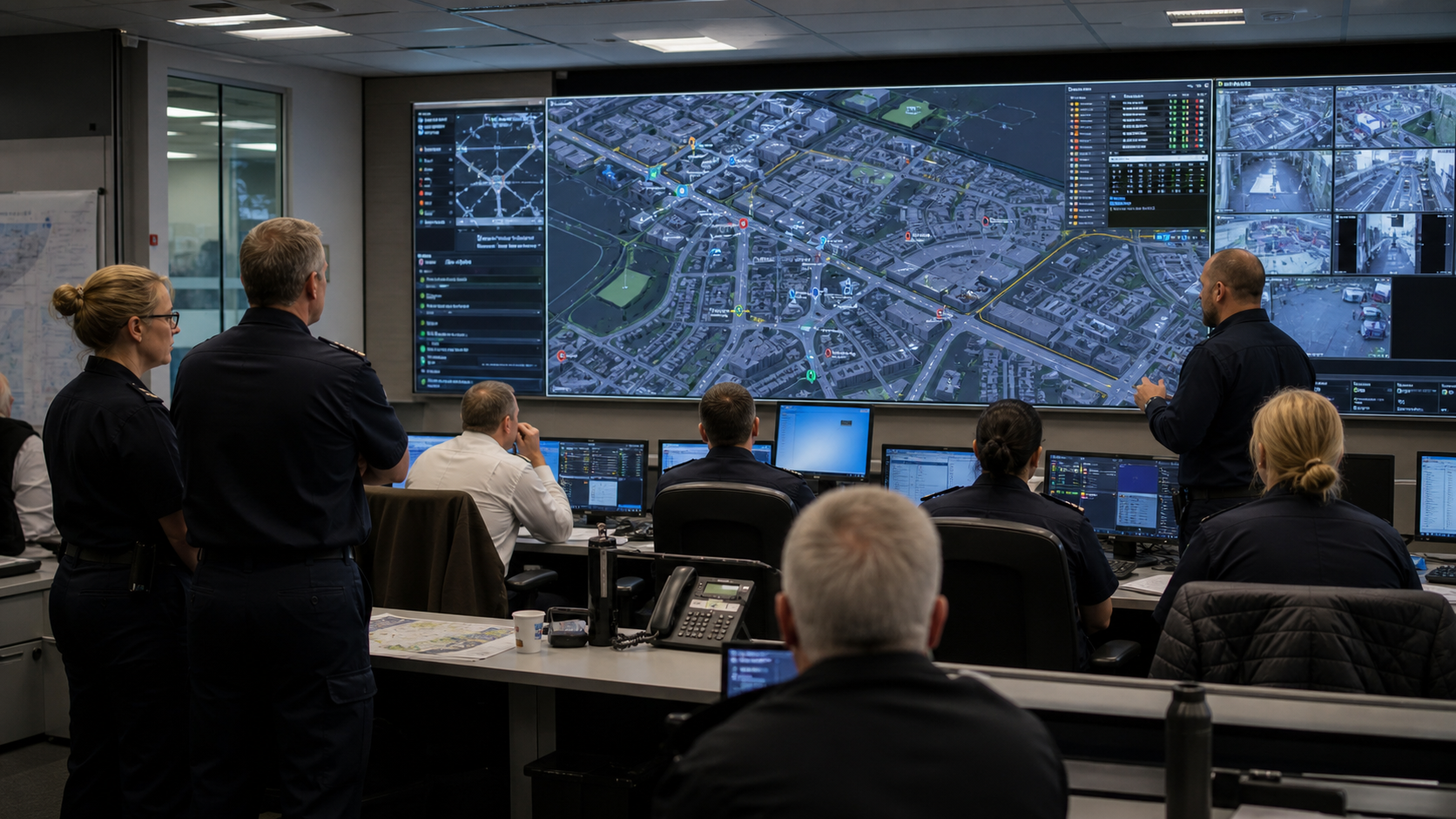
Illustrative public safety command team using an urban operational model.

01 / ILLUSTRATIVE SCENARIO

Urban public safety coordination

A dense city centre, transport interchange and major event create overlapping demand, constrained access and competing priorities.
MODEL INPUTS

Incident and demand historyRoad, pedestrian and transport networksResource locations and availabilityCommunications and surveillance coverageEvent plans and access constraints

SCENARIO TESTS

Alternative staging and cordon plansResponse routes under congestionCommand and communications resilienceDrone and remote-sensing coverage

DECISION OUTPUTS

Coverage and travel-time comparisonsIdentified infrastructure gapsScenario-specific operating conceptsEvidence for pilot and investment decisions
DISCUSS A SIMILAR OPERATIONAL QUESTION →
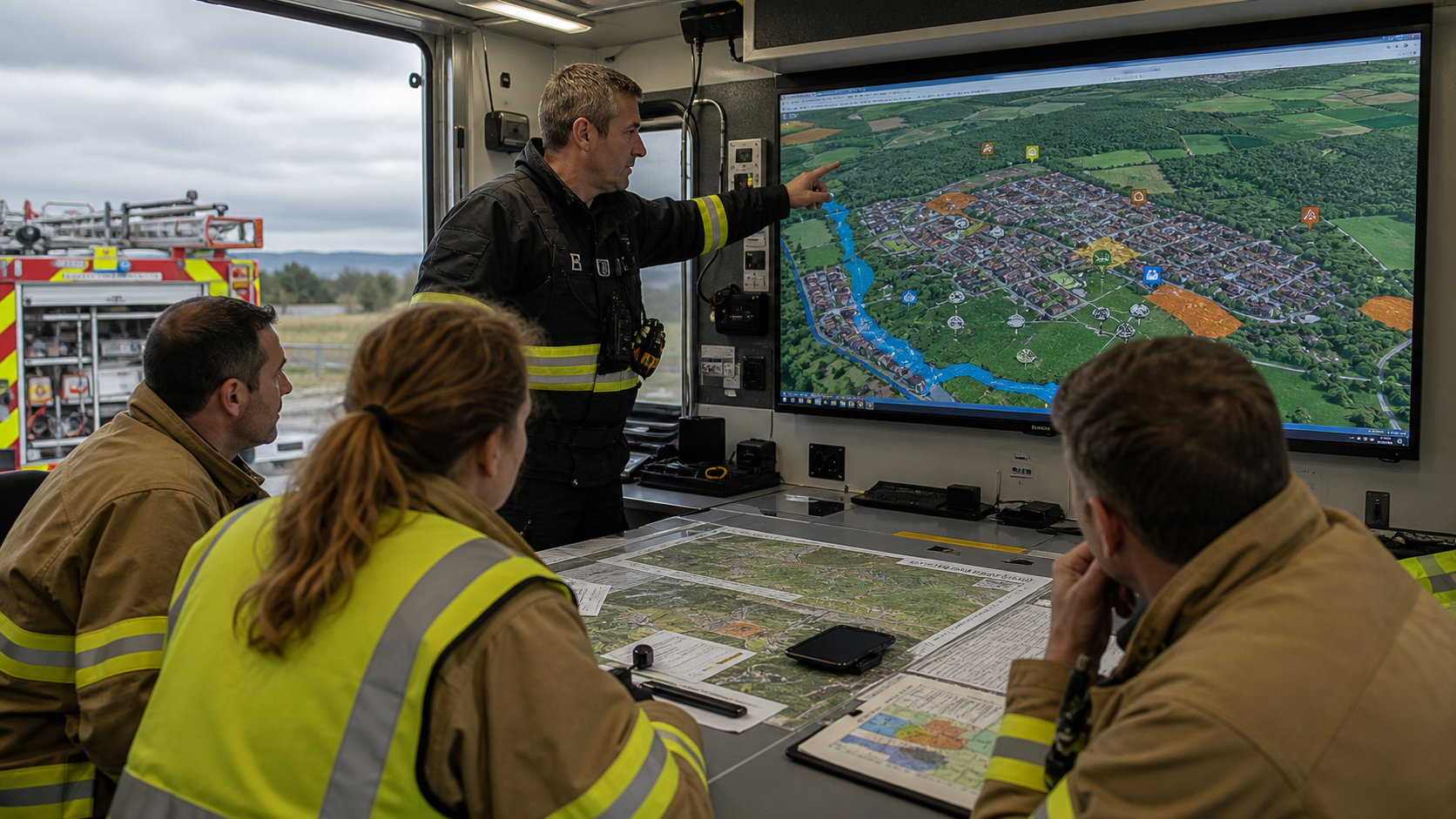
Illustrative fire and rescue team assessing terrain and emergency access.

02 / ILLUSTRATIVE SCENARIO

Fire and rescue resilience

Wildfire, flooding and urban incidents require one view of terrain, access, water, specialist assets and changing operational conditions.
MODEL INPUTS

Terrain, vegetation and flood dataStations, appliances and specialist assetsRoad access and water sourcesWeather and demand scenariosMutual-aid assumptions

SCENARIO TESTS

Station and fleet positioningAccess loss during severe weatherWildfire spread and evacuation optionsRobotics and drone deployment

DECISION OUTPUTS

Resource-positioning evidenceVulnerable route identificationInfrastructure prioritiesMeasurable pilot requirements
DISCUSS A SIMILAR OPERATIONAL QUESTION →
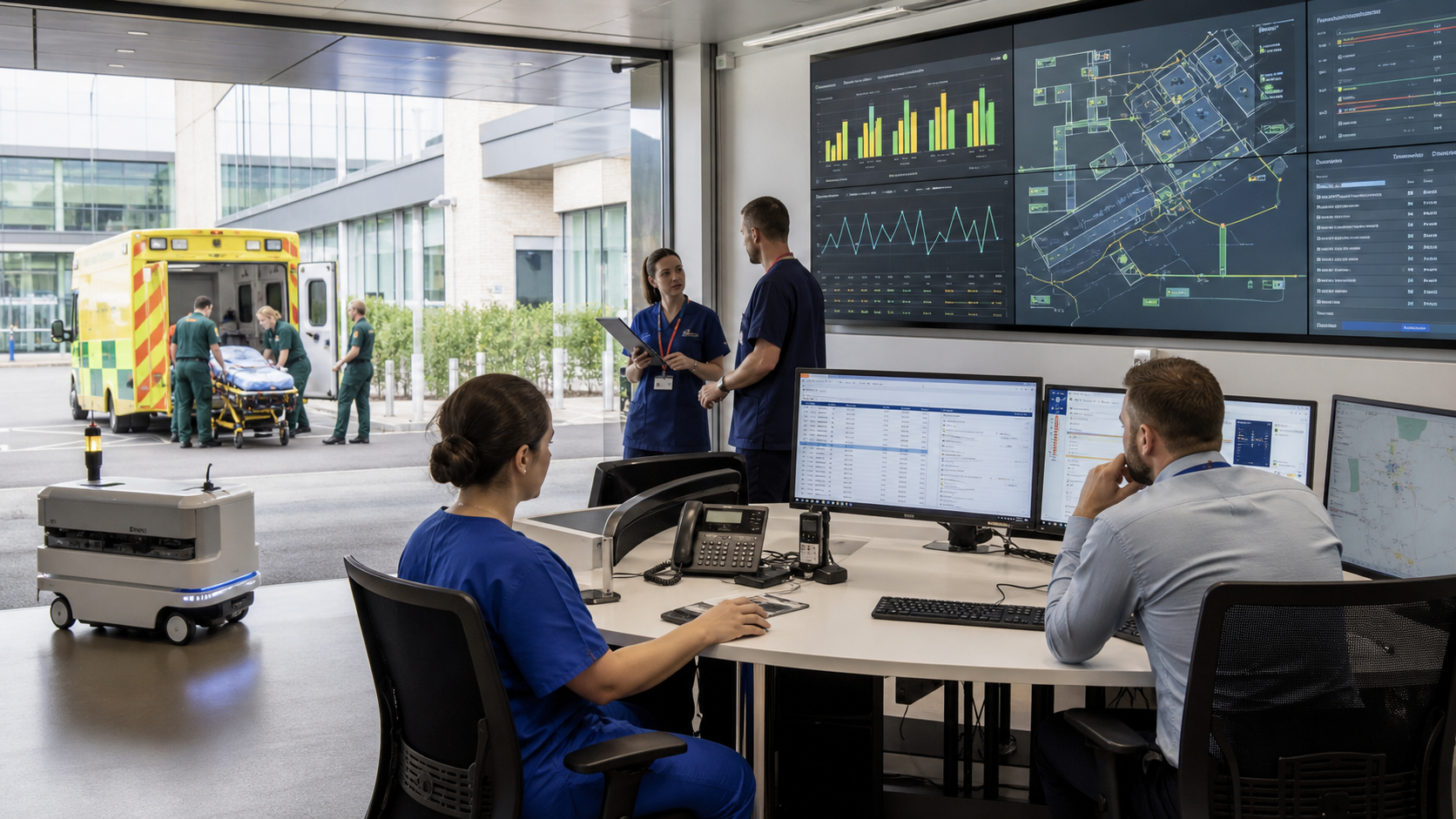
Illustrative teaching hospital logistics and ambulance arrival model.

03 / ILLUSTRATIVE SCENARIO

Teaching-hospital logistics

A large acute hospital must coordinate arrivals, internal movement, equipment, pharmacy, portering and autonomous logistics without disrupting care.
MODEL INPUTS

Site and floor layoutsArrival and internal demand patternsLift, corridor and secure-access constraintsEquipment and consumable flowsStaffed and autonomous task costs

SCENARIO TESTS

AMR routes and charging locationsPeak-period demand and lift contentionDelivery consolidation and task allocationPhased deployment across clinical zones

DECISION OUTPUTS

Feasible route and task libraryInfrastructure readiness planTime and utilisation baselineWhole-life cost and scale case
DISCUSS A SIMILAR OPERATIONAL QUESTION →
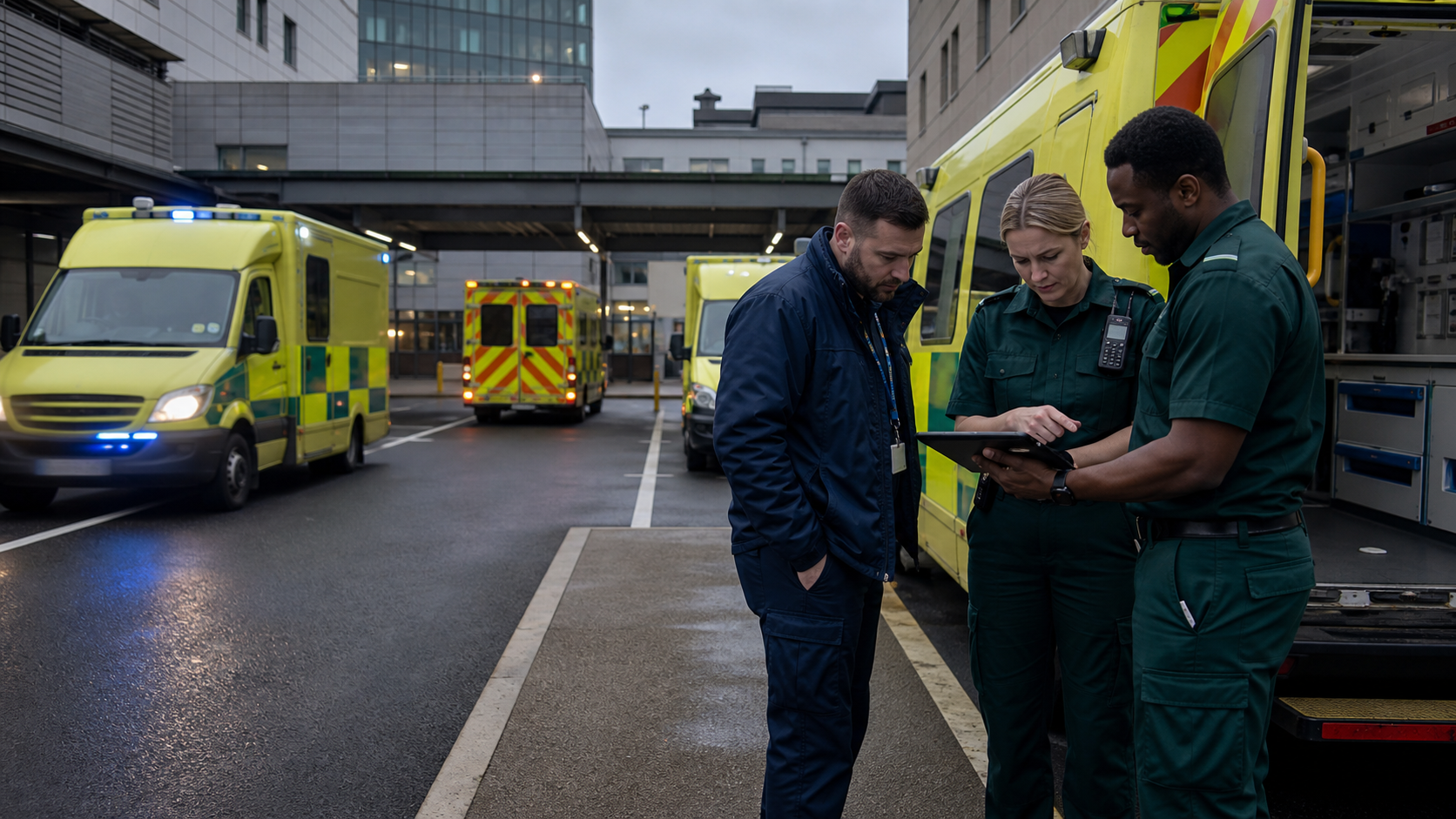
Illustrative ambulance-system capacity planning at a teaching-hospital arrival area.

04 / ILLUSTRATIVE SCENARIO

Ambulance system capacity

Response performance depends on demand, fleet positioning, travel conditions, hospital access and handover capacity across the whole system.

MODEL INPUTS

Time-and-location demandFleet, station and standby-point dataRoad speeds and disruptionHospital arrival and handover patternsShift and availability assumptions

SCENARIO TESTS

Dynamic fleet positioningAlternative standby locationsDemand surges and hospital constraintsRouting during road or weather disruption

DECISION OUTPUTS

Coverage and response comparisonsDemand and capacity pressure pointsOperational-change optionsInvestment and pilot measures
DISCUSS A SIMILAR OPERATIONAL QUESTION →

FROM QUESTION TO EVIDENCE

Build your
scenario.

GOHJI can define the baseline, model alternatives and establish measurable criteria for a pilot or procurement decision.

REQUEST AN OPERATIONAL ASSESSMENT ↗