Fire & Rescue
Incident response, wildfire, flood planning, station coverage, fleets, robotics, drones, inspection and training.
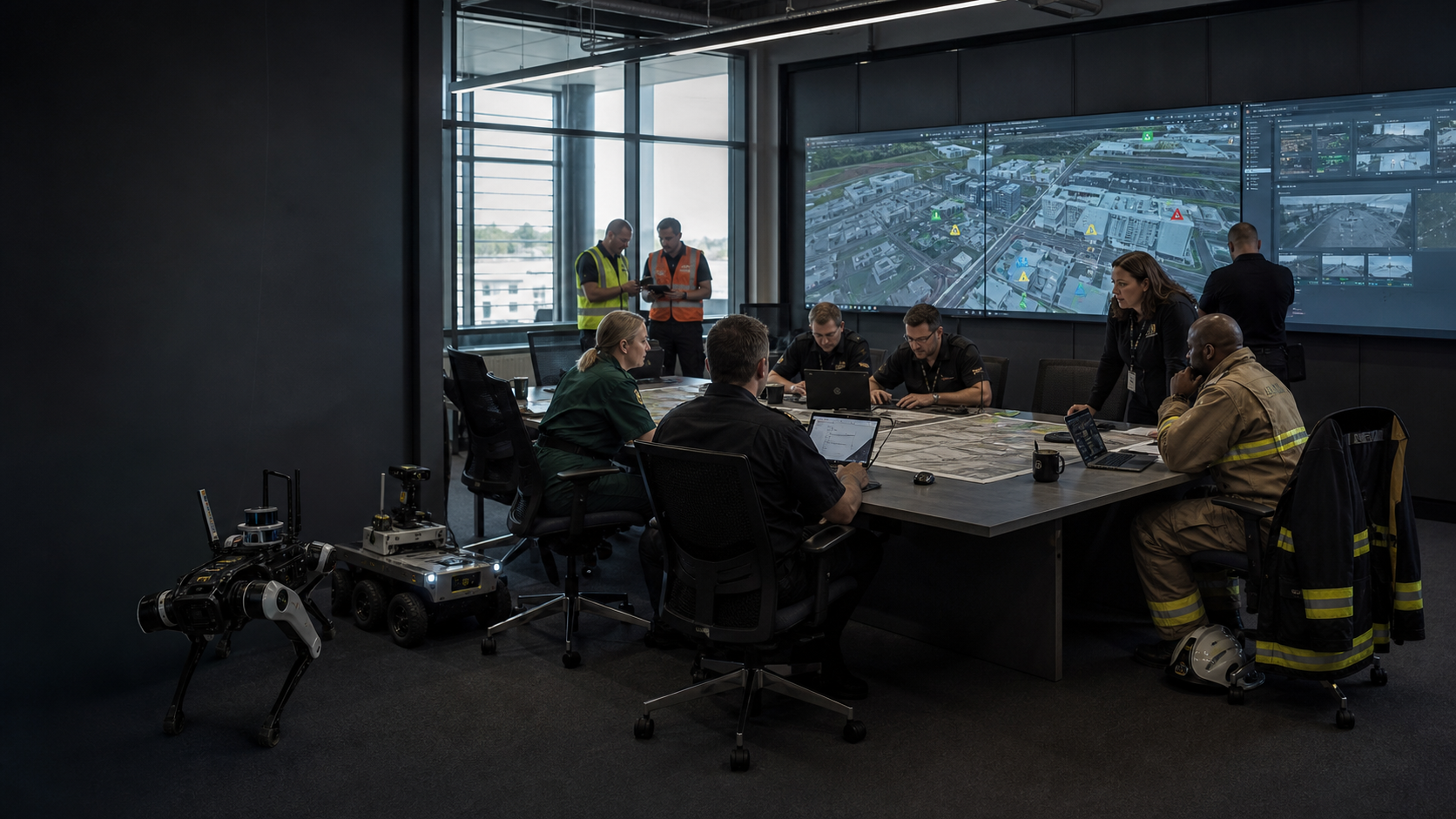
EMERGENCY SERVICES · PUBLIC SAFETY · RESILIENCE
We help emergency services understand complex operational environments before committing resources, infrastructure or capital.
01 / THE OPERATION
Emergency services operate where decisions affect time, safety, cost and public outcomes. Technology therefore has to fit the operation, not the other way around.
GOHJI examines people, vehicles, sites, communications, data, geography, response patterns, workflows and existing systems. This creates a stronger basis for investment and procurement.
02 / WHO WE SUPPORT
Incident response, wildfire, flood planning, station coverage, fleets, robotics, drones, inspection and training.
Fleet deployment, response modelling, routing, demand, hospital interaction, logistics and autonomous support.
Urban operations, facilities, event planning, surveillance infrastructure, robotics, drones and coordination.
Hospital logistics, autonomous delivery, facility planning, patient flow, asset movement and infrastructure.
Emergency planning, infrastructure resilience, major incidents, flooding, severe weather and multi agency response.
Technology assessment, operational resilience, autonomous systems, strategic estates and infrastructure planning.
03 / DIGITAL TWINS FOR RESPONSE
A digital twin can represent a station, hospital, city, fleet, transport network, incident area or wider response system. The purpose is not simply to create a visual model. It is to create a better decision environment.
EXPLORE DIGITAL TWINS →04 / FIRE & RESCUE
Examine complex scenarios through simulation and digital twin methods.
Model terrain, access, fire spread, resources, evacuation routes and specialist assets.
Assess access routes, vulnerable infrastructure, rescue resources and changing conditions.
Model buildings, roads, emergency access, agencies, command and resource demand.
Test how changes to stations, vehicles or response areas affect coverage and utilisation.
05 / AMBULANCE & HEALTHCARE
Emergency healthcare is influenced by far more than vehicle response time. GOHJI examines demand, fleet positioning, travel time, hospital access, handover, internal logistics, equipment movement and resilience.
06 / POLICE & PUBLIC SAFETY
GOHJI can support assessment and modelling for urban operations, major events, infrastructure and transport hubs without implying a specific deployment.
07 / MULTI AGENCY SYSTEMS
Emergency response often depends on interaction between fire, police, ambulance, NHS, local government, infrastructure operators, transport and utilities. Digital twins can make those dependencies visible and testable.
08 / DRONE AS FIRST RESPONDER
Digital twins help organisations test coverage and operational scenarios before wider deployment. Any real deployment must also consider applicable aviation, privacy, safety and operational requirements.
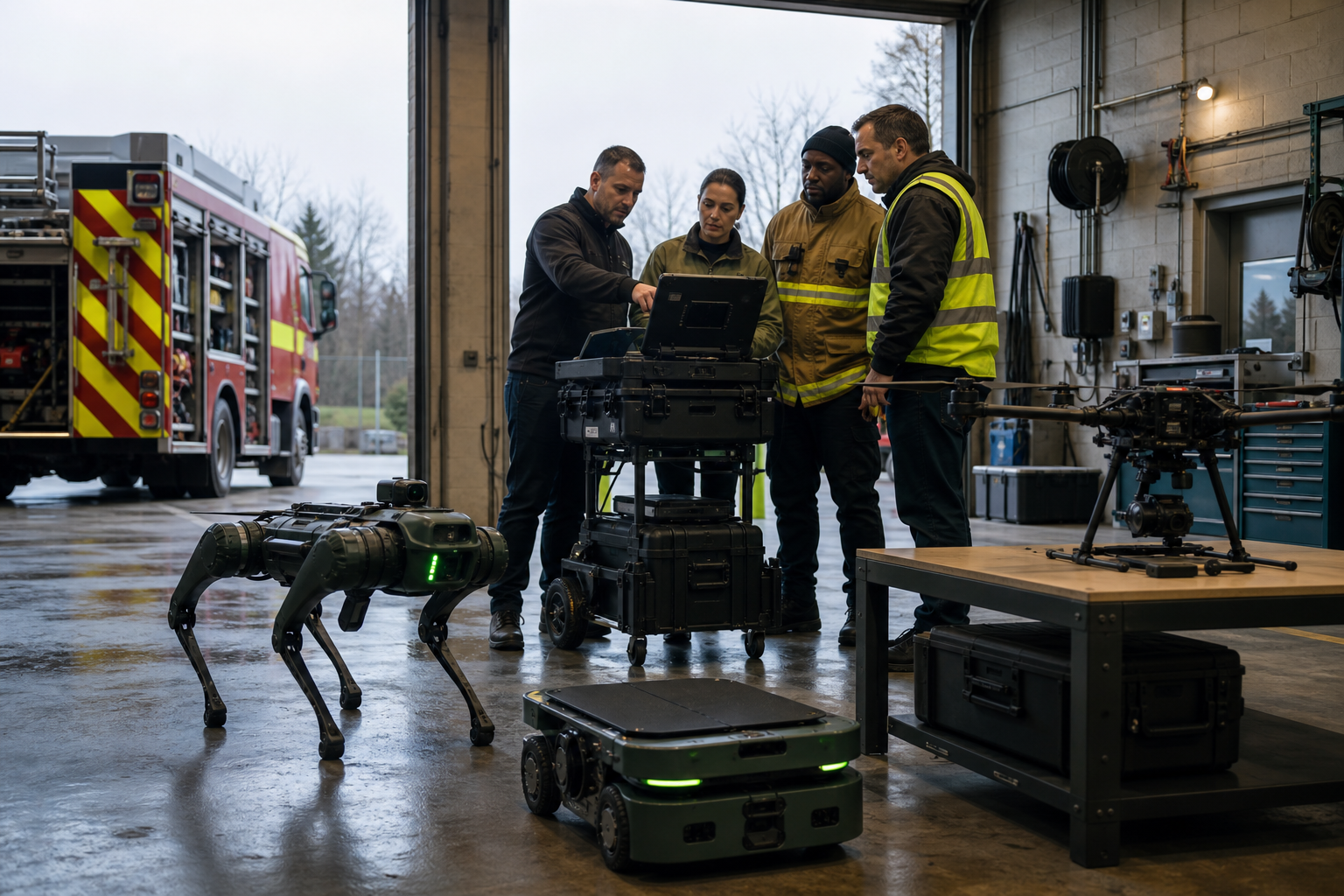
07 / ROBOTICS FOR EMERGENCY SERVICES
Robotics can create value where environments are dangerous, repetitive, remote or difficult to access. We assess inspection, reconnaissance, hazardous environments, search, sensing, logistics and infrastructure monitoring before recommending procurement.
ROBOTICS & PROCUREMENT →08 / INFRASTRUCTURE ASSESSMENT
10 / TRAINING & SIMULATION
Scenario environments can support preparation and procedure testing without creating real world danger or disruption.
09 / FROM CONCEPT TO OPERATION
10 / BUILDING THE FINANCIAL CASE
We examine operating cost, implementation, infrastructure, training, support, utilisation and expected operational benefit.
12 / FINANCIAL ANALYSIS
Measure current operating cost and performance.
Define the technology, infrastructure or operational change.
Compare utilisation, response, productivity, coverage, risk and cost.
PLANNING THE NEXT GENERATION OF RESPONSE?
GOHJI can assess the challenge, model the environment, test the options and create a route from concept to deployment.
REQUEST AN OPERATIONAL ASSESSMENT ↗DISCUSS A PILOT